Showing posts with label faculty. Show all posts

MFA Applications Will Kill Your Soul (But Don't Let That Stop You)


SO
, for months now I've been meaning to post a list of things I learned from the MFA application process. But I just didn't have the strength. Now that I'm safely far, far away from that soul-crushing process, I think I'm ready to give it a go.

Here's the knowledge-like substance I gleaned from the whole torrid affair.

1) MFA APPLICATIONS WILL KILL YOUR SOUL. But pleeeease don't let that stop you. It doesn't feel like it now, but there's a light at the end of the tunnel. Or insert uplifting cliche of your choice here.

I applied during the last semester of my undergrad. (I graduated December 2008.) I was trying to finish my senior thesis and get through papers & midterms & finals, and at the same time I was revamping my application list again and again, studying for the GRE, taking the GRE, ordering transcripts, writing endless SOP drafts, trying to figure out how to apply to each school (why why WHY can't this process be more streamlined/standardized?), trying to get my writing sample in order, etc. etc. etc.

That was the longest semester of my life. I'd tried to prepare over the previous summer, but by the time I actually sent in my last application, my list of schools was completely different, so all my summer work ended up being kind of irrelevant. Actually, strike that. It would've been a lot harder without the thinking head start, even if I did most of the grunt work during the semester.

Waiting sucks. Rejection sucks. Not knowing sucks. Knowing sucks. Spending 24 hours a day glued to the MFA Blog, TSE and P&W until you forget what the sun looks like sucks. Second-guessing your writing sample/SOP/application list/reasons for living sucks. The whole process really, really sucks.

In the end, it was all worth it. I got into a kickass program with the funding I couldn't live without, and I am so. freaking. grateful.

If I hadn't gotten in, I would've applied again. I was thinking Teach for America for my Plan B.

SO, anyway, I know it's awful. But you're gonna make it. Or maybe you already have. High five!

2) YOU'RE THE DECIDER. Tom Kealey's MFA Handbook is invaluable. Buy it, read it, heed its advice---up to a point. In the end, the only person who really knows which schools should be on your list is you. (Wait, actually I think that advice is in the Handbook, too.) TSE and the P&W boards can be really helpful, too. But there is no magic list. There is no MFA Monarch who can tell you exactly how to get in at your dream school.

3) THERE'S NO SUCH THING AS A SAFETY SCHOOL. There just isn't.

I applied to 9 schools. I got into Minnesota and waitlisted (as in, bottom-of-the-list-don't-hold-your-breath-listed) at Cornell. I got rejected outright by 7 schools, including Rutgers-Newark & UMass Boston & Florida, where the stats and the hype and my professors made me think I had some kind of a shot in hell. I also got rejected by Michigan & Syracuse & UMass Amherst & UT Austin/Michener, where the stats & the hype made me think I'd have just as much luck balling up my application and flushing it down the proverbial toilet. But I felt the same way about Minnesota, and somehow that happened for me.

I guess my point is: Apply where you actually want to go to school, where you can actually get funding, and don't worry so much about the stats & the hype. Just do your best and then sit back and see what happens.

At some point I told one of my letter-writers that I was worried because I felt like my list was too pie-in-the-sky, and that's basically what he told me. I think it's really good advice, and I'm glad I followed it. I didn't apply anywhere I wouldn't have been really happy to end up.

This application thing is so not a science. Follow your heart (and the funding!)

You can see my final rundown here: All Results Are In.

4) SCHOOLS WILL FIND YOUR BLOG. They will find it, they will read it, and wondering if it's having any effect on their decisions will drive you crazy. I was totally convinced that schools would never look for, let alone find my blog. But then I started seeing views from urls at schools I'd applied to---I knew because of StatCounter---ON or close to the days those schools sent out decisions. And then the administrative coordinator at Minnesota confirmed, when I was on my visit there, that they like to take a look at them. She did say that they do it after making decisions, so it has no effect on that, but who knows if that's true at other schools.

If you're keeping an open journal during admissions season, be somewhat careful. I really, really wasn't careful, and I tortured myself over it later. It might be a good idea not to show all your cards, just in case.

See this post: Off the Record (You're Not Out There, Are You?)

5) FIND EVERY WAY TO SAVE $$$$. This is a crazy expensive process, and in the end, it's kind of like betting. I'm chronically broke, and I hate betting (why risk not having money I already have for extra money I'm pretty sure I won't win?) So I was all over the money-saving jedi moves.

Michigan, UT Austin/Michener and UMass Amherst will waive their application fees if you send in the proper request form, along with documentation of financial need. This was a big help to me.

Cornell's site said they'd waive their fee in extraordinary circumstances, but it sounded like they were less cool with it than the other schools, and it scared me off, so I didn't ask for the waiver there. I probably should have. There are other schools out there, like Brown, that will also waive their fee, but I mostly just know about the ones where I applied. Doing the research really pays off.

If you get a GRE waiver from your undergrad school (knocks the price of the GRE in half!) a copy of that waiver will usually serve as proof of financial need. That's the easiest way. If you didn't or can't get a waiver, a letter from your financial aid office stating that you're a financial need student (very low EFC, received x percentage of need-based aid, etc.) will do the trick.

Ask the financial aid office at your school about GRE waivers, well ahead of time. As with the application fee waivers, you have to have a significant amount of documented financial need to qualify. And don't forget to always fill out that FAFSA!

Oh! And of course, the most important part: do your research about program funding! (!!!) Do see Seth Abramson's article about funding (here), do consult the MFA Handbook, and do make sure that the info you're getting is still current.

6) READ FACULTY BOOKS, AS MANY AS YOU CAN, AS EARLY AS YOU CAN. Funding (including teaching) had to be first, for me. And then came location. I'm ashamed to say I really didn't manage to start reading faculty works until after my application list was set in stone. But if I had it to do again, faculty would tie with location. After reading faculty works, I really feel like maybe I kinda sorta "get," in some tiny way, why I got in at Minnesota. That could just be in my head, and I still believe that the biggest factor was probably plain old luck, but hey. I feel a certain click, and that's a nice feeling.

That doesn't mean that just because you love somebody's work, they're going to like yours. And it doesn't mean that just because somebody likes your work, you're going to get in at their program. But even if you're strapped for time, like I was, and it comes down to just reading the faculty at the programs you've already decided to apply to, reading faculty work could really help if you're lucky enough to have to pick between 2 or more programs.

Here's the reading list I made up, for the schools I applied to: Fiction Faculty Books

7) COMMUNITY HELPS. But it also drives you crazy. But it also helps. But it also drives you crazy.

I was lucky enough to have a best friend, Sacha, who was applying to Creative Writing PhD programs at the same time I was applying to MFA programs. I think I would've gone crazy without her. If you don't have a friend applying to MFAs at the same time you are, try to find one.

That's part of what the blogs & boards are good for. It felt good to get info, to commiserate and celebrate with everyone else who was going through the crazy ups and downs of the admissions season. I feel like I've met some really awesome people and made a lot of great connections.

But sometimes it's just too much. Try to take it easy. I really, really didn't take it easy, and I think I'm just now recovering. (Ha?) Don't let the information overload/radio silence cycle eat your brain or crush your soul. See this post: Freedom from Information

*
Well, I think that's about all I can think of, at least for now. I hope somebody out there finds this helpful. You can find links to all the various MFA hotspots at the linkbar up top, and some more stuff at my Minneapolis Links. My linked searches there are MN-specific, but you can always just plug in your own search term once you get there.

For more information/crazytalk/possibly useless advice, check out the labels below, or check out the searchbox in the sidebar. And feel free to comment with questions. I'll try my best to answer, when I have a chance.

And GOOD LUCK! May the MFA force be with you.

Martindale Literary Prize for Short Fiction


Remember that short story contest I mentioned a little while back? Well, somehow---I won! For a short story I first wrote in 2007, called "Wet Season."

I still can't quite believe it. My first writing prize! And the first time I've actually made money through my writing. I totally got all teary and shaky when they called me up to the little podium last night, even though I'd promised myself that I wouldn't.

They made the announcement at the opening reception for the 2009 Pima Writer's Workshop. A reading by Peter Turchi, (the judge for 2009 and a faculty member at the workshop), was the main event.

Linda Lyons won second runner-up for her story "Footsteps." Tom Printsner (sp?) won first runner-up for his story "Leonard and Martha," but unfortunately he was out of town.

Peter Turchi was nice enough to sign my copy of his short story collection, Magician, even though I was all mumbly and nervous.

Meg Files was super-sweet, and she signed my copy of her craft book, Write from Life. (Laura Van Etten, my workshop instructor from this past semester, gave that to me as a going-away-to-Minneapolis present! If you're ever looking for a writing class in Tucson, check out one of Laura's, it was great. And she recommends Meg Files' class highly. Judging by this book, I absolutely agree, and I'm sorry I never had the chance.)

Nancy Wall gave me the call to tell me, last Tuesday. She was really nice. I cried. She made me promise not to tell anyone until after the announcement---it was so hard to keep my mouth shut!

Nancy Wall, reading Peter Turchi's comments about "Wet Season." Meg Files, taking a picture.
(PLEASE disregard my terrifyingly bad posture, eesh.)


Peter Turchi was the judge for 2009. Here he is reading his work. (Pardon the craptastic photo quality.)

Linda Lyons getting her certificate from Nancy Wall

Meg Files, Chair of the Pima English Dept. and Pima Writer's Workshop founder

It's called the Martindale Literary Prize. It's an annual prize for short fiction, it began in 1988. The rules are that you can only submit one unpublished story, you can't have won before or be Pima faculty, the story has to be between 5,000 and 10,000 words AND you have to be taking at least one class at Pima Community College---so the applicant pool is pretty much limited to people in Tucson.

And the award is $1000! I'm still hyperventilating. I can't even explain how much this will help with my move to Minnesota. Things have been looking really grim on my financial front, lately.

As much as the money saves the day for me, this really does mean even more to me on an emotional and professional level. I feel SO grateful and so lucky. I hope this post doesn't come off as braggy, because that's not what I want. I'm just really happy---the MFA, and now this? It's like the world is telling me: Go ahead, do this. I've got your back. (And I go: Well, I was going to go for it anyway, but this really helps!)

The prize is a bit obscure, I have to admit. You'll have trouble finding information about it on the internet---apparently they don't have a website set up for it. (I'm tempted to ask them if they'd like me to make one for them! But I know that's crazy talk.)

So please forgive me---I'm going to indulge myself a bit here, and tell you everything you'll ever never want to know about the Martindale Literary Prize.

I'm warning you ahead of time. I'm going to blab and blab, so feel free to skip this. Okay? Okay.


Kaleidoscope, published by Pima Press in 2007.
Kaleidoscope is an anthology of nineteen winning stories from a yearly contest at Pima Community College in Tucson, Arizona.

The competition, sponsored by the Martindale Educational Foundation, awards an annual prize of $1000. As Mr. Robert C. Martindale explained in 1987 at the first meeting to discuss this competition, his foundation was offering a substantial award, and he therefore expected substantial stories.

The judge for each year's competition is a well-known fiction writer, and all of the judges have commented on the unusually high quality of the work submitted. Several of the authors appearing in Kaleidoscope have had short story collections or novels published, while the work of others has appeared in serious literary journals, some publications containing the stories from this anthology.

Hey, wanna know who won the Martindale in 2000? Tayari Jones! Remember when I read Leaving Atlanta and loved it? She did her MFA at ASU, and she's fiction faculty at Rutgers-Newark now. The Untelling is on my list of must-read-soons.

Here's the flier that started this whole thing:


Wanna know what's funny? Peter Turchi and Charles Baxter (faculty at Minnesota) edited a book on craft together! It's called Bringing the Devil to His Knees: The Craft of Fiction and the Writing Life. Turchi was the director of the Warren Wilson MFA program from 1993-2008, and Baxter still teaches there, I think.

In case you're thinking, Hey, that sounds fishy!, let me assure you that this is just a wonderful cosmic coincidence. Check out the flier: They didn't say who the judge would be, and Turchi never saw my name. Even if he had, I can promise you that at this point I've said about seven words to Charles Baxter, (Hello, it's so good to meet you), and he has no idea what I'm doing with my insignificant little summer, or what kinds of longs shots I'm shooting for. Turchi did his MFA at the University of Arizona, so really it's not so strange that he's here to do the Workshop. But I just love unexpected connections like this.

*

What about the story? "Wet Season" was part of my MFA application portfolio. I wrote it for a summer fiction workshop taught by the excellent Rachel Yoder. At the time she was an MFA student at the University of Arizona. It was my first creative writing workshop, and she was just such a really engaging, dedicated, supportive teacher. Please, please go check out NewPage's review of Alligator Juniper, Prescott College's literary journal---she edited this issue!

I've revised the story a few times already, and I plan to keep working on it. After taking Laura Van Etten's awesome short fiction workshop this past semester, I realize that what I probably need to do is go back and cut, cut, cut. She has this way of saying things that really made stuff make sense to me in all kinds of new, sparking and/or comforting ways.

If you check out my earlier post, you'll see that I submitted this story to a few other contests/journals, and struck out. I guess it goes to show---just keep trying! You never know.

*

While I'm at it, I'd like to thank:

(Well, my family, of course, and S. But those are givens! Always.)

Rachel Yoder, Emily Lundin, Alison Hawthorne Deming, Manuel Muñoz, Laura Van Etten, Carlos Gallego, Tenney Nathanson, Judy Blunt, Terry Woronov, Praise Zenenga, Bridget Radcliff, Wendy Burk, Susan White, Ilham Khuri-Makdisi & Ron Grant. Thanks for being such inspirational (& dedicated!) writers, teachers and advisors. Your classes & workshops/story-essay-poem comments/advice, guidance & encouragment/recommendation letters/help ETC! have made such a huge huge difference in my life. Many of you probably have no idea what a big impact you've had on me---I really ought to do something about that.

There are SO many more wonderful teachers I'd like to mention here, but it would take miles...I hope you know who you are.

Not that most of these folks are likely to see this : )

*

Phew! It's ridiculous how long I've rambled on. Goodnight, world!

U Minnesota Prospectives Weekend


Here's a bad photo I took of one of the Dinkytown murals.

So far I've been too busy to write about my visit to Minneapolis, but I had a great time. I got there on Thursday, and met another incoming student at the airport---we rode the lightrail into the city together, and then split up for a bit (she went to meet her host, I went to the department.)

I met Julie Schumacher (fiction faculty and the current Program Director), and Kathleen Glasgow (the Program Coordinator.) I was nervous, but they were both really friendly, and I was so happy to be there, so I managed to keep it together.

I sat in on a poetry seminar taught by Maria Damon (poetry faculty), called "Poetry: Bodies and Knowing." It seemed like a reading/lit course with a little bit of workshop thrown in. I was lucky, because the current students happened to be reading their work that day.

Some other prospectives showed up and Kathleen took us out for dinner at a little diner in Dinkytown, an area right next to campus. (I love that name, it's so unabashedly ridiculous. And a little research shows that there's an actual Armenian restaurant, which makes me very very happy.)

I was STARVING. It was maybe 6 pm by now, and I hadn't eaten anything yet, just coffee. I ordered a grilled buffalo chicken sandwich, which was actually really tough, but I didn't care. And I had a nice cider beer. Kathleen and my future fellow students (?) were delightful dinner companions.

Next, we went to this event (from the Minnesota MFA site):

First Books


An evening of readings with debut authors Salvatore Scibona, Nicole Johns and Kao Kali Yang.


Thursday, March 26, 2009, 7:30 pm reading, followed by a panel discussion with the authors and editors from Graywolf Press and Coffee House Press. AI Johnson Great Room, McNamara Alumni Center.


Salvatore Scibona is the author of The End, nominated for the National Book Award. The novel takes place in one day during the lives of six carnival workers. Nicole Johns is the author of the raw and engaging memoir, Purge: Rehab Diaries. Kao Kalia Yang's details the trials of her family's journey from Laos to Saint Paul, Minnesota in The Latehomecomer.


After that we walked over to the Kitty Cat Klub, a bar in Dinkytown. I thought the name was borderline creepy---why not avoid the unnecessary k, if you're going to have three words with a k sound in the name of your establishment? I'm just saying.

It was loud and crowded, but the beer was cheap (they had cider on tap!), the decor was funky, and there were sofas at the back. Good times.


I don't think people smoke in Minneapolis? And the streets are all eerily clean. The Mississippi runs right through campus, separating Minneapolis and St. Paul. There were huge chunks of ice in the river. It was sunny, and the snow looked like dust motes, or ashes, when it snowed.


Here's a really bad picture of me in an incredibly un-picturesque spot. It's the only one I got, but take my word for it---most of Minneapolis was lovely.


More soon.

Minneapolis


Lind Hall, home of the Creative Writing Program and the English Department

I accepted my offer from Minnesota the night before I flew out for the prospectives' weekend. I just got home---I feel so lucky. It was a dream, except that everything really happened.

Tucson Festival of Books: So Worth Not-Sleeping-In For


I've been meaning to post about the Tucson Festival of Books, which was really just awesome all around. I keep putting it off, because there's so much to write about, and I'm lazy and tired and should be doing other things. I have S. here visiting me this weekend, she's asleep in the other room, so I thought I'd squeeze in at least part of what I mean to say about the festival.

I started out at the poetry reading by Alison Hawthorne Deming and Luci Tapahonso (see the original post for more links.)

The wonderful Prof. Deming was my creative nonfiction undergraduate thesis advisor---she encouraged me to throw in a few poems, too. I learned so much from my time working with her, and she's really such a generous teacher and person, not to mention an immensely talented writer. I so enjoyed seeing her read and having the chance to chat for a bit.

She read from her new collection of poems (her fourth), called Rope. It's coming out through Penguin in September 2009. You can download the catalog entry for the book on her website. Here is the description offered there:

Alison Hawthorne Deming's fourth collection of poems follows the paths of imagination into meditations on salt, love, Hurricane Katrina, greek myth, and the search for extraterrestrial life, all linked by the poet’s faith in art as an instrument for creating meaning, beauty, and continuity—virtues diminished by the velocity and violence of our historical moment. The final long poem “The Flight,” inspired by the works of A. r. Ammons, is a twenty-first century epic poised on the verge of our discovering life beyond earth.


Later that afternoon I went to the "Writing Life" panel given by Jason Brown, Manuel Muñoz, Ander Monson and Kevin Canty. At first it looked like it was going to be just me and Prof. Deming (who happened to show up) and one other person in the audience---Canty took a picture of the sad little spectacle. The panel didn't make the general schedule, otherwise I'm sure there would have been plenty of people. Thankfully, a cadre of current UA MFA students and a few others showed up just in time.

Jason Brown mentioned that Aimee Bender once told him she "finds it painful to write," and that she sometimes actually ties her leg to her writing chair for two hours a day, to make sure she can't roam the house finding ways to avoid the writing. I love that.

I was going to just buy one book, I told myself I wouldn't spend more than that (I make $7.50/hr, so one new book = two hours of steaming milk, wiping tables and serving bacon) and I decided on Jason Brown's Why The Devil Chose New England for His Work, since I didn't have one of his books yet, and he's UA fiction faculty and I'm leaving. Long story short, I ended up buying a few.

Okay, I'm running out of time here. I want to jump in the shower before S. wakes up.

I have lots more to write about, but I want to add that Kevin Canty suggested a book for me called Art and Fear (because I asked the panel about writing and fear, and then turned a hot-lobsterish shade of red for the rest of the day---more about this later) and left me a very nice note when he signed my copy of his most recent book of stories, Honeymoon.

Ander Monson (new nonfiction faculty at UA, Wikipedia somehow describes him as "an American novelist, poet, nonfiction writer, and charming douche," no joke) left some encouraging words when he signed his Other Electricities for me, and he added a delightfully cryptic footnote.

Brown thinks Muñoz might "make it big time" (if he hasn't already), and Muñoz talked about how he often composes in his head, a habit he picked up during his no-time-to-write time in a publishing house. I do that too, probably most of us do, don't we? He said the fear never goes away.

Brown told it like it is, in a too-comical-to-be-depressing-really way. "Some people just don't have the stomach for the fear," he said, amongst other things. Gulp?

Tucson Festival of Books


So, tomorrow morning marks the start of the very first Tucson Festival of Books!

Here is a link to maps and schedules, and here is the festival blog.

The UA Poetry Center has a list of their events.

The Pima County Public Library has a page about the festival.

There's an entry about it on the NewPages blog.

The Arizona Public Media page features video.

They even have a Facebook page.

And here's a clip about the festival on Youtube.

*


Here's what I'm thinking for Saturday:

Poetry readings by
Alison Hawthorne Deming and Luci Tapahonso will be the first of the day. Former U.S. Poet Laureate Billy Collins will be giving a reading to close the day out.

I'm also really interested in a talk called "Fiction out of Friction: Evolution, Arabs and Other Controversial Topics," with Robin Brande and Laila Halaby. Unfortunately, it's at the same time as Prof. Deming's reading! I will happily choose to go see my former teacher, but I hope I'll have a chance to hear about the Halaby/Brande talk.

Also at the same time is a talk on "Public Speaking for Shy Writers" with Michael Charton. Too bad!

My next pick: Fenton Johnson, Beth Alvarado and Naomi Benaron will give a talk on "Shaping Truth in Memoir and Fiction."

It's at the same time as two other talks that sound interesting: "Life Worth Living, Inside Out: The Sufi and the Sage," with Albert Clayton Gaulden and Mansur Johnson..."Oral History and Community Story: The Foundation and Inspiration of Fiction Writing," with Patricia Preciado Martin.

Later on, I plan to attend this very nifty panel discussion, which is one of the events at the UA BookStore:
Jason Brown, Kevin Canty, Ander Monson & Manuel Munoz

"The Writing Life: Surviving & Publishing in Today's Market"

And then this one:
Aurelie Sheehan and Laura Fitzgerald

"Art or Craft? What Makes Fiction Work and Why?"


That means I'll miss a talk on "The Art of Eavesdropping," with Stephen Kuusisto. (We just did an exercise on dialogue and eavesdropping in the community college workshop I'm taking.) And a talk called "In the Driver's Seat: The Character-Driven Plot," with Elizabeth McKenzie, Alfredo Vea and Ann Cummins. And one called "We Cannot Look Away: Exploring a Social Conscience Through Writing," with Stella Pope Duarte...tempting.


Of course, this is a pretty ambitious schedule. And I'm giving up my precious "sleeping in" days, so hopefully all the literary excitement will keep my energy levels high. But seriously, what an incredible opportunity, right here in Tucson. Hooray!


*


On Sunday, I plan to go see the

"KALACHAKRA" SAND MANDALA

Viewing & Dissolution Ceremony
for the Wheel of Time, Sand Mandala with respected Buddhist scholar and former attendant to the Dalai Lama, Losang Samten.

More soon...

Congratulations to Manuel Muñoz!


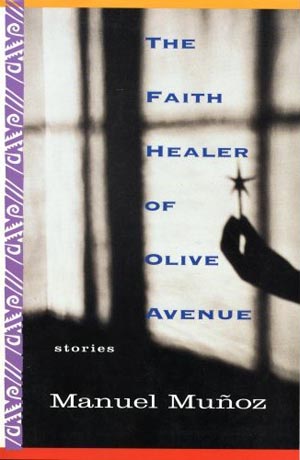
I bumped into Prof. Manuel Muñoz today after work (I'd stopped by campus to deposit my check and chat with a couple of friends.) The four of us got to talking about his second collection of stories, The Faith Healer of Olive Avenue. We talked about the heartbreakingness of his story "When You Come Into Your Kingdom."

Then I mentioned that "Tell Him About Brother John" was one of my favorite stories in the collection, and he told us that that story has been selected for an O. Henry Prize and will be published in the 2009 collection! This is wonderful news---I couldn't have been happier to hear it. It's kind of funny, because we read the 2008 collection in the advanced fiction workshop that I took with him this past Fall semester.

Recently, he won the 2008 Whiting Writers' Award. He got his MFA at Cornell and is now teaching fiction at the University of Arizona.

Here is a mediabistro.com interview with him about teaching and the "writing vote."

Here is a great little chat with him from miapogeo.com.

Here's an article from the UA website that came out when he won the Whiting Award.

I feel so lucky and grateful to have had the chance to take a class with him. He's an amazing writer and an equally amazing teacher. It's just so clear that he's truly invested in helping his students to improve as writers.

Congratulations Prof. M!


PS---I know, I know, I wasn't supposed to blog first today. But it's a special circumstance! And so far, I've kept my promise to stay away from the blogs. But I'm jonesing bad, man, jonesing bad. Into the tub with me!

Update 8:30 pm: Still haven't looked. I think I'll make it this first day. That has to be the hardest part, right? The only problem is that I've smoked more today than I have in a long time (like 5 cigarettes, instead of one or two.) My health vs. my peace of mind...well, I wasn't very healthy, anway.

Off the Record (You're Not Out There, Are You?)


Ahem...

I've developed the most ridiculous fear that some of the programs I've applied to are finding my blog and actually reading it. This would be a terrible, terrible thing.

"But you're anonymous," you might say. Well, not so much, if you've read my SOP.

How would they find me? I have no idea. (The forums? Google? The tin foil hat I'm wearing?)

Aren't I blowing my relative importance in the MFA world completely out of proportion by worrying that actual faculty are taking the time to scour the internet looking for little old me? Well, yes, I am. That's the only thing that's keeping me from totally losing it about this.

This incredibly self-involved hypothesis is based on stupid, stupid StatCounter. I wish I never installed it. Besides telling me how many people stop by the blog, I just discovered that I can see where they're checking it from. In the past week or two, I've had hits from both Syracuse and U Minnesota.

Of course, I also had hits from Indiana U and Boston U and U Arizona and U Alabama and U Tennessee, and I didn't apply to any of those. The most likely explanation is that these hits are just fellow/future applicants/students looking for MFA info. If so, hi!

But today, on the day when U Florida started notifying for fiction, I see a hit from Gainesville. What?! What?!

So, on the off chance that my paranoid delusions are in fact not delusions (humor me?), I just want to say that some of what I say on this blog is silly, and all of it is off the record, and most of all---please don't judge me based on my babble? Also, hi.

Actually, I'll extend that message to everyone out there in TV-land, not just the imaginary MFA faculty. This process (and waking up at 4 am for my job) is kind of wearing away at my sanity these days. Maybe an open diary was just a bad idea, during decision season.

Too late to turn back now---I believe I believe I believe I'm falling in love? What song is that again? Where am I?

Now back to our regularly scheduled blog, where I'll try to tune the crazy down. Thanks!

*

UPDATE 4/1:

They will find your blog
, no matter how anonymous you think you are, and they will read it. And, undoubtedly, they will snicker behind their hands at how silly you are. And even if they don't, you'll always be sure that they did. Just a little warning, there.

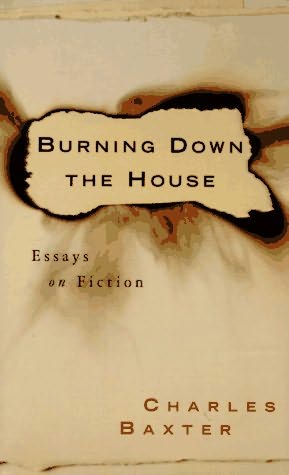
BURNING DOWN THE HOUSE, by Charles Baxter


Burning Down the House: Essays on Fiction, by Charles Baxter

I started reading it a while ago---completely fascinating, it's blowing my mind in several ways.

But now, every time I randomly hear the Talking Heads song he named the book after, I start to think it's a sign pointing me to Minnesota. And by "every time," I mean the two times that that's happened recently.

1) I'm watching the third season of Six Feet Under (don't tell me anything!) on DVD, and in the episode where it's Ruth's birthday, that song plays while they're all dancing.

2) I have my iPod on shuffle, and it comes up halfway through my bus ride home from work.

Here's your ticket pack your bag: time for jumpin' overboard
The transportation is here


Anyway, I mean to talk about the book (and several others) at some point. Right now, my brain is a warm gelatinous substance, and I'm going to drown my anxieties/exhaustion in tonight's new episode of Lost.

PS---Of course:
Everything's stuck together
I don't know what you expect staring into the TV set

*
PPS---

Books I'm reading right now
(I'm doing that bad thing where I move back and forth every few days):

Burning Down the House: Essays on Fiction, by Charles Baxter

Little
, by David Treuer


Books I'm almost finished with:

Believers, by Charles Baxter---I'm reading the title novella at the end

An Explanation for Chaos
, by Julie Schumacher---I'm reading the last, title story

CivilWarLand in Bad Decline
, by George Saunders---I'm reading the novella at the end: "Bounty"

Hmm...I think I've discovered a pattern. The problem is with me, not with the books. I zipped through all the stories up until the last of each, and then I started trading back and forth. Maybe it's really a subconscious effort to prolong the experience?

Book(s) I plan to start very soon, here:

Concertina, by M.J. Fitzgerald


(Post in progress...Lost started!)

U Minnesota: My First, My Last, My Everything?

I'm almost positive I'll be heading to Minnesota in the fall, and I'm incredibly excited about it. I don't want to give the impression that I'm not, and I know that that's probably the impression I've been giving lately---what with all the whine, whine, whine. I feel ungrateful.

I've said it before, and I'll say it again: like many others going through this process, I started out feeling like my chances of getting in anywhere at all were slim to none. I stand in awe of the mysterious combination of circumstances (what they were, I have no idea) and the huge amount of luck that led to an acceptance for me.

The only thing keeping me from going ahead and accepting my Minnesota offer right now is the fact that it's in, well, Minnesota.

I'm a little bit scared of the Midwest. The only experience I have with the region is this: When I was almost eleven years old, my family set out in a rinky-dink little used RV, leaving forever my grandparents' house in Watertown, Mass. and heading for the vague and distant "West." On our way, we passed through Kansas. All I remember about Kansas is flatness, a lack of grocery stores (we couldn't seem to find bread) and a strange profusion of car washes. I'm sure there's more to Kansas than that, but that's what I remember. Also, I'm aware that Minnesota does not = Kansas, and that they are in fact quite far apart.

What is Minnesota Nice? Is it real? Just a stereotype? It sounds kind of scary. Wikipedia says:

Minnesota nice is the stereotypical behavior of long-time Minnesota residents to provide hospitality and courtesy to others. The term is also sometimes used in a derogatory way, to connote a sort of smiling stubbornness, forced politeness, false humility or passive aggressive hostility.


Stereotypes of Minnesotans often overlap with qualities of other people from the Upper Midwest, including the perception that many are quiet and do not wish to offend others or cause a disruption, even if it's for their own benefit. Writer Garrison Keillor played with this image in a piece written for the radio program A Prairie Home Companion called "Wobegonics," the supposed language of Minnesotans which includes "no confrontational verbs or statements of strong personal preference, you know." [...] The generosity of state citizens has gained respect—the heavily-reported influenza vaccine shortage of fall 2004 did not strike the state as hard as elsewhere since many people willingly gave up injections for others.[1]


Minnesota Nice is a 2003 28-minute documentary by Jeffrey Schwarz about the Coen brothers' movie Fargo, a movie that displays some of the stereotypical behavior.


Here's another link about the supposed phenomenon in relation to the Twin Cities.

The cold I can probably handle. I know it's the cold equivalent of the heat here in Tucson (eyeballs-frying-hot), but I much prefer being cold to being hot. You can always bundle up, but there's only so much you can do about burning flesh. I dealt with Boston blizzards, even kind of enjoyed them---felt like an adventure. I know MN is going to be much worse, but I think I'll be less miserable than some might be.

In other ways, Minneapolis sounds great, like the "Boston" of the Midwest. If you haven't noticed, I'm in love with Boston. I spent the younger days of my childhood moving around between suburbs of Boston (Watertown, Concord, Belmont, Lexington---and a strange interlude in the boondocks of Clinton.) I have many happy memories of dancing around outside the Au Bon Pan in Harvard Square, listening to the street performers and watching the crazy old men play chess.

Anyway!

Apparently Minneapolis is a big literary and publishing center, has lots of museums, bookstores and all that. People say you can get by without a car, which is VERY important to me, since I don't drive. Some pointed out that it sucks having to get groceries by bus when it's snowing and a billion degrees below zero, but I dealt with some of that in Boston and did fine with just the T.

*

My overactive imagination/raging sense of curiosity is another part of my hesitation. I feel like I should wait until I've heard from everyone. That's the standard process, isn't it? I'm bad with decisions and I feel like I need to have all the information first. When I got the call, my first instinct was to say Yes, yes, I'll be there! I can come tomorrow! But I had to bite down on that urge and try to be sensible about it.

I hate to keep them waiting, though. They've been so good to me. I guess they expect it, right? They know we've all applied to multiple schools and that we're waiting to hear back from the rest. Maybe I should send them chocolates.

The funny thing is, when one of my letter writers asked me (around the time I was sending out my first applications) which school I was really pulling for, the first thing that popped out of my mouth was: Minnesota. I wasn't even sure why, but that was my natural reaction. I said, "Actually, I'm really excited about the program in Minnesota." He seemed a little bit surprised. He wanted Cornell (yeah, right) or Rutgers-Newark for me (because of their diversity focus, which I also find attractive.)

I explained how I really like that Minnesota encourages genre-blending/cross-genre experimentation. This is from their website:

The program encourages experimentation across genres, fostering the discovery of new and varied forms for a developing voice.

I also love that they have social writing programs that focus on young writers (SASE Wings) and women of color (Voices from the Gaps.) I'm so interested in programs like these, and I would love to have the chance to get involved during my MFA.

And the faculty, of course, is amazing. I've been reading their books, and I'm just so excited.

Maybe it's fate. Maybe Minnesota and I are just meant to be together. It must mean something that I felt strangely drawn to the program, and they must see something that they connect with in my writing. That's an incredibly good feeling, knowing that. What more could I possibly ask for?

Anyway, again.

I'm going to the prospectives' weekend, March 26-28. I'm in touch with a couple of other admits who are going, as well, and I can't wait to meet everyone, see the city, explore the program on the ground. Minneapolis, here I come!

*

I'm spending way too much time on this blog. I have homework (writing!) to do, and I go back to work tomorrow. Did I say that my shifts start at 6 am? I need to calm it down, here. But I probably won't.

Arizona, Anyone?


In case anyone out there is applying to the MFA @ Arizona, here's my take on the school and the town. I just finished my undergrad here, and I've lived in Tucson for about 3 1/2 years now. Personally, I'm ready to go---I can't wait to move eastwards again. But you can definitely enjoy yourself here if you put your mind to it. And it's a great school.

Adapted from something I posted to the "Programs in Arizona" thread on
P & W, here:

*


From my own experience:

As far as nonfiction and poetry go, Alison Hawthorne Deming is amazing. Manuel Muñoz, in fiction, is incredible, too. (He's new here, and he just won the Whiting Writer's Award.) I took an intro to poetry workshop with Tenney Nathanson, and it was such an inspirational and entertaining experience. I'm afraid I've never taken a class with Jason Brown.

Try to take a lit class with Charles Scruggs, Praise Zenenga, Carlos Gallego and/or Susan White...Charles Sherry if you like philosophy and you're brave. There are a lot of great faculty members in both creative writing and literature.

I can't tell you too much about the atmosphere in the MFA program, because there's really very little interaction between grad and undergrad---unless they're teaching a class. I took an introductory fiction workshop with a great student teacher. It seemed like she was having fun at the program.

I do know that there's a lot going on in the department in general. Creative Writing is housed in the English Department. The UA Poetry Center always has something going on, readings etc. I've been to one of the separate grad student readings at Casa Libre and it seems like those are really fun and intimate.

As far as Tucson goes, the biggest downside for me is just the heat. It's oppressive. It's nice here in the winter, great in the spring, but summer is definitely the longest season. Also, unless you live right on campus, (or you really love biking, even in 115 degree weather), you probably want to drive. The bus system is crap. You can make it if you live on a bus route that heads straight to campus without transfers, but it's confusing and it's a pain.

There's some fun stuff to do around town. We have The Loft, a little indie/arthouse cinema, and they always have all kinds of crazy/interesting things going on. There's definitely stuff to do at night, a pretty good selection of restaurants and bars---but nothing like you'd get in a more metropolitan kind of city. Tucson kind of feels more like a really big town. 4th Ave, University Ave and a few places Downtown are the main areas for going out, all really close to the University. There's a drive-in movie theatre here too, De Anza's, which I love.

Honestly speaking, you want to live as close to campus as you can. It's not hard to find a relatively affordable place, especially if you're sharing.

Campus feels homey. There are olive trees and palm trees all over the place. You'll probably spend most of your time in the Modern Languages building, which is close to the Student Union (the food court is there, unfortunately we don't have a traditional dining hall) and the library. I have to say that I don't understand why there are metal benches all over campus---you definitely don't want to get anywhere near those in the summer.

Campus' centerpiece is this long stretch of "grass" (it's usually dead) called the Mall. Again, this is a shadeless alley of burning death when it's hot out. Also, crazy preachers come to visit sometimes.

If you love the desert, you'll love Tucson. (I kind of don't love the desert. I grew up in Arizona and all I want is greenery.) We're surrounded by mountains and you don't have to drive far at all to get to "the desert"---saguaros and all. There's also Mt. Lemmon pretty close by, when you want to get out of the heat. The monsoons are always fun, when they come. Lots and lots of rain. Bisbee is a really fun daytrip. And of course we're not far from Mexico.

We're pretty short on museums for my taste, but we do have the Arizona State Museum, the Tucson Museum of Art, the UA Museum of Art and the Arizona-Sonora Desert Museum. The U of A is big in astronomy, and there's an observatory here. The Anthropology Department is also big, and there's a lot of archaeological stuff going on.


Well, that was incredibly long and I don't know how helpful it was. Let me know if there's anything specific you're wondering about.

LEAVING ATLANTA, by Tayari Jones


* Watch out for spoilers! *

I definitely don't want to ruin this book for anyone---I'm only about halfway through it myself. I'll try not to give away any major plot points, but if you're like me and you like to come to a book with a clean slate when you can, you might want to skip this post.

Tayari Jones (I encourage you to check out her blog) is on the fiction faculty at the Rutgers-Newark MFA program. Here's a description of Leaving Atlanta, her first novel, from the Rutgers website:

Her first novel, Leaving Atlanta, is a coming of age story set during the city’s infamous child murders of 1979-81. Jones herself was in the fifth grade when thirty African American children were murdered from the neighborhoods near her home and school. When asked why she chose this subject matter for her first novel, she says, “This novel is my way of documenting a particular moment in history. It is a love letter to my generation and also an effort to remember my own childhood. To remind myself and my readers what it was like to been eleven and at the mercy of the world. And despite the obvious darkness of the time period, I also wanted to remember all that is sweet about girlhood, to recall all the moments that make a person smile and feel optimistic.”

Leaving Atlanta received many awards and accolades including the Hurston/Wright Award for Debut Fiction. It was named “Novel of the Year” by Atlanta Magazine, “Best Southern Novel of the Year,” by Creative Loafing Atlanta. The Atlanta Journal-Constitution and The Washington Post both listed it as one of the best of 2002.

I'm on page 131 right now, and so far it's a moving and engaging read. The book has a couple of interesting little quirks that I've been thinking about.

The first is that she places herself (or at least a little girl with her name) in the story, as a peripheral character. It makes sense, because the book is set in a time and place that she experienced. At the same time, it's quirky, because it seems like the more common thing is for the author to just write the POV character as a version of themselves without saying anything about it. Little Tayari pops up here and there, never having much serious interaction with the main characters, but kind of present throughout.

The POV character in the first section is LaTasha (Tasha) Baxter. At one point, Tasha is thinking about a party she didn't get invited to:

"Oh," Tasha said. She was glad that she hadn't been invited; her mother probably would have done the very same thing and Tasha would have ended up like Tayari, looking at her math book, trying not to cry. (69)

It has a certain effect, at least for me---every time Tayari-the-fifth-grader is mentioned, I find myself drawn out of the story for just a tiny moment. I think about Tayari Jones, the author. Thinking about her reminds me that even though this novel is fiction, it's about a situation that really did happen. I wonder if that's what she was trying to do?

* Warning, interesting craft choice "spoiled" here---I liked the surprise of it *


The second thing I wanted to mention has to do with point of view. The first section of the book is told from Tasha's POV, using a very close third person. Nothing unusual there, but we really get to know Tasha, and we get to feel invested in her character and her situation. That's why it was such a surprise to turn the page to the second section---all of a sudden, we're thrown into a second person POV.

The most interesting thing about the use of the second person here, I think, is the way that we already know this "you" character. We were introduced to him, Rodney Green, through Tasha's POV in the first section of the book. He's another fifth-grader in the same class.

I think we're all taught that the second person is difficult to maintain. I think it works here because Jones has already set this character up for us. He has a context in relation to the other children and in relation to the setting. He's not just some vague, unknown "you"---he's Rodney from before. It's less jolting to "be" him, because we already know something about who and where he is. For me, it didn't take long for the second person POV to become (for the most part) comfortably invisible.

Again, though---the second person draws attention to itself, and there are more of those tiny moments when I'm pulled out of the story by it. It makes me think, again, about how this is a kind of historical fiction. Intentional? I guess I think so.

*

Just one last note about the use of Little Tayari Jones---I love that she often seems to be doing particularly goofy kid things:

Why doesn't she just ask you how old you are and move on? Tayari Jones, two aisles over, is sniffing rubber cement and could use a little adult supervision. But Miss Russell squats beside you and leans forward as if your vocational leanings are of some consequence. (122)

It makes me laugh every time, and it makes me like the author for using "her" character that way.

*

Update 1/17---I finished the book. The third and final section is in the first person, from another child's POV.

It ended too soon (at the right time, but...man.)

Fiction Faculty Books/My Current Reading List

So I made this list a while back, of books from all the faculty authors at the programs I've applied to. It's definitely not exhaustive, and for the most part I tried to focus on short stories---it's a long list! Basically I just wanted to have something with me to take to the library, to make sure I could find at least one book by each author. I'm embarrassed to say this, but I just recently realized that the Michener Center does in fact have a permanent faculty (I think?). So there aren't any books from them yet.

Authors and programs are listed in pretty much random order here. I apologize for any mistakes.
s= short stories, ya= young adult, e= essays, c= craft

CORNELL

J. Robert Lennon
Pieces for the Left Hand (s)
Mailman

Maureen McCoy
Junebug
Walking After Midnight

Ernesto Quiñonez
Bodega Dreams
Chango’s Fire

Stephanie Vaughn
Sweet Talk (s)

Helena Maria Viramontes
The Moths (s)
Their Dogs Came with Them
Under the Feet of Jesus

Robert Morgan
Gap Creek: The Story of a Marriage
The Balm of Gilead Tree (s)


RUTGERS-NEWARK


Tayari Jones
Leaving Atlanta
The Untelling

Alice Elliott Dark
In the Gloaming (s)
Naked to the Waist (s)

Jayne Anne Phillips (Director)
Black Tickets (s)
Fast Lanes (s)

Rigoberto Gonzalez (poetry)
Men without Bliss (s)


MINNESOTA


Charles Baxter
The Believers (s)
Burning Down the House (e)
The Feast of Love

M.J. Fitzgerald
The Placing of Kings
Concertina

Julie Schumacher (Director)
An Explanation for Chaos (s)
The Body is Water
Black Box (ya)

David Treuer
The Translation of Dr. Apelles: A Love Story
Little
The Hiawatha


MICHIGAN


Michael Byers
The Coast of Good Intentions (s)
Long for This World

Peter Ho Davies
The Ugliest House in the World (s)
Equal Love (s)
The Welsh Girl

Nicholas Delbanco
What Remains
The Writer’s Trade (s)
About My Table (s)
The Sincerest Form: Writing Fiction by Imitation (c)

Eileen Pollack (Director)
Paradise, New York


SYRACUSE


George Saunders
CivilWarLand in Bad Decline (s)
In Persuasion Nation (s)
Pastoralia (s)
The Brief and Frightening Reign of Phil

Arthur Flowers
De Mojo Blues: de quest of Highjohn de Conquer
Another Good Loving Blues
Cleveland Lee’s Beale Street Band
Mojo Rising: Confessions of a 21st Century Conjureman

Christopher Kennedy (Director, poetry)


UMASS AMHERST


Chris Bachelder
U.S.!
Bear v. Shark

Noy Holland
The Spectacle of the Body (s)

Sabina Murray
The Caprices (s)
A Carnivore’s Inquiry
Slow Burn


UMASS BOSTON


John Fulton
Retribution (s)
The Animal Girl (s)

Askold Melnyczuk
What is Told
Ambassador of the Dead
The House of Widows


U FLORIDA


Mary Robison
An Amateur’s Guide to the Night (s)
Why Did I Ever (s)
Believe Them (s)

Padgett Powell
Aliens of Affection (s)
Edisto
Typical (s)

David Leavitt

Family Dancing (s)
A Place I’ve Never Been (s)
Arkansas (s)
The Marble Quilt (s)

Jill Ciment
Small Claims (s)
The Law of Falling Bodies


TEXAS/MICHENER
(Visiting Faculty?)