Showing posts with label novels. Show all posts

Martindale Literary Prize for Short Fiction


Remember that short story contest I mentioned a little while back? Well, somehow---I won! For a short story I first wrote in 2007, called "Wet Season."

I still can't quite believe it. My first writing prize! And the first time I've actually made money through my writing. I totally got all teary and shaky when they called me up to the little podium last night, even though I'd promised myself that I wouldn't.

They made the announcement at the opening reception for the 2009 Pima Writer's Workshop. A reading by Peter Turchi, (the judge for 2009 and a faculty member at the workshop), was the main event.

Linda Lyons won second runner-up for her story "Footsteps." Tom Printsner (sp?) won first runner-up for his story "Leonard and Martha," but unfortunately he was out of town.

Peter Turchi was nice enough to sign my copy of his short story collection, Magician, even though I was all mumbly and nervous.

Meg Files was super-sweet, and she signed my copy of her craft book, Write from Life. (Laura Van Etten, my workshop instructor from this past semester, gave that to me as a going-away-to-Minneapolis present! If you're ever looking for a writing class in Tucson, check out one of Laura's, it was great. And she recommends Meg Files' class highly. Judging by this book, I absolutely agree, and I'm sorry I never had the chance.)

Nancy Wall gave me the call to tell me, last Tuesday. She was really nice. I cried. She made me promise not to tell anyone until after the announcement---it was so hard to keep my mouth shut!

Nancy Wall, reading Peter Turchi's comments about "Wet Season." Meg Files, taking a picture.
(PLEASE disregard my terrifyingly bad posture, eesh.)


Peter Turchi was the judge for 2009. Here he is reading his work. (Pardon the craptastic photo quality.)

Linda Lyons getting her certificate from Nancy Wall

Meg Files, Chair of the Pima English Dept. and Pima Writer's Workshop founder

It's called the Martindale Literary Prize. It's an annual prize for short fiction, it began in 1988. The rules are that you can only submit one unpublished story, you can't have won before or be Pima faculty, the story has to be between 5,000 and 10,000 words AND you have to be taking at least one class at Pima Community College---so the applicant pool is pretty much limited to people in Tucson.

And the award is $1000! I'm still hyperventilating. I can't even explain how much this will help with my move to Minnesota. Things have been looking really grim on my financial front, lately.

As much as the money saves the day for me, this really does mean even more to me on an emotional and professional level. I feel SO grateful and so lucky. I hope this post doesn't come off as braggy, because that's not what I want. I'm just really happy---the MFA, and now this? It's like the world is telling me: Go ahead, do this. I've got your back. (And I go: Well, I was going to go for it anyway, but this really helps!)

The prize is a bit obscure, I have to admit. You'll have trouble finding information about it on the internet---apparently they don't have a website set up for it. (I'm tempted to ask them if they'd like me to make one for them! But I know that's crazy talk.)

So please forgive me---I'm going to indulge myself a bit here, and tell you everything you'll ever never want to know about the Martindale Literary Prize.

I'm warning you ahead of time. I'm going to blab and blab, so feel free to skip this. Okay? Okay.


Kaleidoscope, published by Pima Press in 2007.
Kaleidoscope is an anthology of nineteen winning stories from a yearly contest at Pima Community College in Tucson, Arizona.

The competition, sponsored by the Martindale Educational Foundation, awards an annual prize of $1000. As Mr. Robert C. Martindale explained in 1987 at the first meeting to discuss this competition, his foundation was offering a substantial award, and he therefore expected substantial stories.

The judge for each year's competition is a well-known fiction writer, and all of the judges have commented on the unusually high quality of the work submitted. Several of the authors appearing in Kaleidoscope have had short story collections or novels published, while the work of others has appeared in serious literary journals, some publications containing the stories from this anthology.

Hey, wanna know who won the Martindale in 2000? Tayari Jones! Remember when I read Leaving Atlanta and loved it? She did her MFA at ASU, and she's fiction faculty at Rutgers-Newark now. The Untelling is on my list of must-read-soons.

Here's the flier that started this whole thing:


Wanna know what's funny? Peter Turchi and Charles Baxter (faculty at Minnesota) edited a book on craft together! It's called Bringing the Devil to His Knees: The Craft of Fiction and the Writing Life. Turchi was the director of the Warren Wilson MFA program from 1993-2008, and Baxter still teaches there, I think.

In case you're thinking, Hey, that sounds fishy!, let me assure you that this is just a wonderful cosmic coincidence. Check out the flier: They didn't say who the judge would be, and Turchi never saw my name. Even if he had, I can promise you that at this point I've said about seven words to Charles Baxter, (Hello, it's so good to meet you), and he has no idea what I'm doing with my insignificant little summer, or what kinds of longs shots I'm shooting for. Turchi did his MFA at the University of Arizona, so really it's not so strange that he's here to do the Workshop. But I just love unexpected connections like this.

*

What about the story? "Wet Season" was part of my MFA application portfolio. I wrote it for a summer fiction workshop taught by the excellent Rachel Yoder. At the time she was an MFA student at the University of Arizona. It was my first creative writing workshop, and she was just such a really engaging, dedicated, supportive teacher. Please, please go check out NewPage's review of Alligator Juniper, Prescott College's literary journal---she edited this issue!

I've revised the story a few times already, and I plan to keep working on it. After taking Laura Van Etten's awesome short fiction workshop this past semester, I realize that what I probably need to do is go back and cut, cut, cut. She has this way of saying things that really made stuff make sense to me in all kinds of new, sparking and/or comforting ways.

If you check out my earlier post, you'll see that I submitted this story to a few other contests/journals, and struck out. I guess it goes to show---just keep trying! You never know.

*

While I'm at it, I'd like to thank:

(Well, my family, of course, and S. But those are givens! Always.)

Rachel Yoder, Emily Lundin, Alison Hawthorne Deming, Manuel Muñoz, Laura Van Etten, Carlos Gallego, Tenney Nathanson, Judy Blunt, Terry Woronov, Praise Zenenga, Bridget Radcliff, Wendy Burk, Susan White, Ilham Khuri-Makdisi & Ron Grant. Thanks for being such inspirational (& dedicated!) writers, teachers and advisors. Your classes & workshops/story-essay-poem comments/advice, guidance & encouragment/recommendation letters/help ETC! have made such a huge huge difference in my life. Many of you probably have no idea what a big impact you've had on me---I really ought to do something about that.

There are SO many more wonderful teachers I'd like to mention here, but it would take miles...I hope you know who you are.

Not that most of these folks are likely to see this : )

*

Phew! It's ridiculous how long I've rambled on. Goodnight, world!

The Genre Closet


About noir/detective fiction (and genre in general, and the question of what is literary):

I went through a period when Walter Mosley was practically all I was reading.

Maybe that's an exaggeration, but I was a huge fan. I even have a picture, circa 2004, where I'm standing next to him at a post-reading book signing, beaming. Part of me thinks I should be ashamed to admit that, (it's the conditioning), but after the Denis Johnson reading, well, "I just don't give a shit."*

And anyway, the larger part of me feels ashamed for worrying about that stuff. Genre or no, (and he's vocal about not liking to be pigeonholed), Mosley's great at what he does. His books still mean something to me. The effect they had on me was literary, I know that. I think his books defy genre.

I had two pet rats, I got them when I was maybe 19. I named them Mouse & Mosley. (Mouse is the name of one of Mosley's characters, in the Easy Rawlins series.) Mouse was one of my favorite pets, ever. She used to sleep in the crook of my arm when I was reading. They're both long dead now.

I admire Ray Bradbury, too. There, I said it. Take that.

I don't write genre, but I sure don't look down my nose at those who do it well. And I think that doing it well means that you still manage to speak to the literary "heart," somehow. Know what I mean?

PS---Look, I found it! I look like I'm 12. (I was 21, in my first year of college.) Why do I always make that goofy picture face?


*Hope the profanity doesn't throw you off, it's actually a reference to the Denis Johnson reading.


Denis Johnson at the University of Arizona Poetry Center


Went to the Denis Johnson UA Poetry Center reading tonight, he was signing books and he signed Jesus' Son for me. Really great reading---he was just so funny and charming. He read from his new noir "shoot-em-up" novel, Nobody Move, which apparently started out as a serial for Playboy.

Also read a poem from The Incognito Lounge, at the request of several audience members. (He seemed pleased, and joked that Tucson is the only town where people have heard of that book.)

I'm actually brand new to Johnson's work. I'm taking a community college fiction workshop one night a week, and "Car Crash While Hitchhiking" was the first story we read. I was intrigued by it, by the fragmentation and especially by the way it ends---really strange and beautiful. So now I'm looking forward to reading the other stories in Jesus' Son.

I wrote a little post-it note with my name on it, but then when I got to him there was nobody there to tell me what to do, and I didn't know if it would be rude to just hand the book to him with the post-it note on the cover---I didn't know if he was signing with names or just signing---so I just handed it to him without the post-it note. And he signed it, but not with my name, which is a little bit sad, but mostly just awesome.

Will write more later, it's almost my worknight bedtime.

Update 4/10:

So, I was jotting things down in my notebook during the reading, mostly all the funny offhand remarks and one-liners. Also the Q & A stuff. Here are some random "quotes" from what I wrote down---please be aware that even though I tend to try to try to write this kind of stuff down verbatim, really it's only as verbatim as I could manage while keeping up (and while still being able to enjoy the reading.) Consider these to be paraphrases, quotation marks be damned.

He'd been "trying to write a novel with no hope of redemption," and had wanted Nobody Move to be that novel. Is that how it turned out?

When he decided to start writing noir, he did some research, and re-read a lot of Raymond Chandler, including Chandler's writing advice: "When in doubt, have a person walk through the door with a gun."---Of Nobody Move, Johnson says: "That happens like eight times in Part One, so in Part Two they have to be naked."

Johnson also mentions that he thinks "Chandler was actually kind of a prude, who lived with his mother most of his life."

Towards the beginning of the reading, Johnson takes a drink from his water bottle. "This," he says, bottle in hand, "will be the signal that we're at a section break." Cue laughter.

"I feel compelled to sum up the plot for you, but I think you get it." We laugh---so far it's been a lot of lying about names and intrigue about who shot who and for how much money.

Cell phone rings in the crowd. "If only," Johnson says. He slaps the podium. "If only you'd timed that for when the phone rings in his pocket!"

Johnson pauses mid-sentence, makes notes. "Excuse me, I'm doing a little editing. Nobody [he says in an overblown tone of voice, for comical effect] edits my stuff except me."

He slips up reading. "Damn it." He pauses. "You know, these are my words." We laugh. "And this is my mouth. Theoretically, there shouldn't be any problem."

He says he likes to ask audiences this question: "What's the difference between a nautical mile and a land mile?" He says nobody's ever had the answer. Some guy in the audience says, "1.3." (He sounds very serious about it. I don't believe him.)

Someone asks if Jesus' Son was autobiographical. "About half of it happened to me and about half of it happened to people I knew," Johnson says. "I don't think any of it didn't happen to somebody. It's either autobiographical or it's stolen."

Someone asks if he had any role in the film adaptation. Johnson says he wrote remarks on the screenplay, and about a 3 page expansion specifically for the film. Apparently the filmmakers had wanted to add a scene or two not found in the book, but had felt "too reverent towards the material" to mess with it themselves. So Johnson wrote the pages. And onscreen, Johnson "was the guy with the knife in his head."

Someone asks if it's true that Jesus' Son started out as a collection of poems. Johnson says no, except kind of, only for the story "Car Crash While Hitchhiking." (That was the first story we read in the night workshop I'm taking this semester.) He says he "started writing a poem, finished it and sent it in, and the minute after mailing it, realized it should have been a story." The poem got accepted, and he had to tell the journal he didn't want them to publish it. Then he wrote it as "Car Crash While Hitchhiking."

Someone asks what inspired him to write noir? Johnson mentions reading Chandler. About the process of writing this book, Johnson mentions reading up on Hemingway's ideas about economy, about "writing tight." He mentions reading Chekhov. "In probably about another two weeks I would've evolved past the ability to write this thing. I would've ended up going to a monastery or something."

He mentions Paul Kane, a 1930s screenwriter who wrote only one book, Fast One, which was put together out of things published in Black Mask magazine. The book had "nothing internal at all," Johnson says. "You only see the characters from the outside. Because Kane was a screenwriter."

Small Boys, Liberia 1992: Someone asks if he plans to write more of the "journalistic traveling war stuff." Johnson says he went to northern Iraq a couple of years ago and did an article for Portfolio magazine, but he has no plans to do any more of that.

NOTE: The following, in this paragraph, IS verbatim, or very close to it. I transcribed it from the crappy iPod audio recording I made: "It just got old," he says. "The same thing over and over again. Figure out some way of getting into a place, finding someone to show you what's going on. This person is risking their life, you know to get the word out about their cause, you know, the plight of their people. Then after about two or three weeks you say---"So long, buddy." You know, just flush it down the toilet and go home. It had just gotten old, it really did, and I just couldn't do it anymore."

"This," he says, and points to the book (Nobody Move). "There's not a lot of literature in there. But I really enjoyed crafting it. And in that sense it's the most literary thing I've ever written. And the end, if you get to the end, I mean, it's not the way a shootemup is supposed to go."

Someone asks: "What are you working on now?" And Johnson says, "Nothing." He laughs. "I woke up about 6 months ago and I just didn't give a shit. And it's been like that ever since. It's not writer's block, I just don't give a shit." Someone asks, "Is it liberating?" And Johnson says that mostly it's just boring. That he's just sitting around the house "waiting for the next chapter to come."

"Which of your books are your favorites?" someone asks. (I think this question is in really poor taste, but hey, it's still interesting.) Johnson lists off: The Incognito Lounge, Angel, Jesus' Son and Tree of Smoke.

Tucson Festival of Books: So Worth Not-Sleeping-In For


I've been meaning to post about the Tucson Festival of Books, which was really just awesome all around. I keep putting it off, because there's so much to write about, and I'm lazy and tired and should be doing other things. I have S. here visiting me this weekend, she's asleep in the other room, so I thought I'd squeeze in at least part of what I mean to say about the festival.

I started out at the poetry reading by Alison Hawthorne Deming and Luci Tapahonso (see the original post for more links.)

The wonderful Prof. Deming was my creative nonfiction undergraduate thesis advisor---she encouraged me to throw in a few poems, too. I learned so much from my time working with her, and she's really such a generous teacher and person, not to mention an immensely talented writer. I so enjoyed seeing her read and having the chance to chat for a bit.

She read from her new collection of poems (her fourth), called Rope. It's coming out through Penguin in September 2009. You can download the catalog entry for the book on her website. Here is the description offered there:

Alison Hawthorne Deming's fourth collection of poems follows the paths of imagination into meditations on salt, love, Hurricane Katrina, greek myth, and the search for extraterrestrial life, all linked by the poet’s faith in art as an instrument for creating meaning, beauty, and continuity—virtues diminished by the velocity and violence of our historical moment. The final long poem “The Flight,” inspired by the works of A. r. Ammons, is a twenty-first century epic poised on the verge of our discovering life beyond earth.


Later that afternoon I went to the "Writing Life" panel given by Jason Brown, Manuel Muñoz, Ander Monson and Kevin Canty. At first it looked like it was going to be just me and Prof. Deming (who happened to show up) and one other person in the audience---Canty took a picture of the sad little spectacle. The panel didn't make the general schedule, otherwise I'm sure there would have been plenty of people. Thankfully, a cadre of current UA MFA students and a few others showed up just in time.

Jason Brown mentioned that Aimee Bender once told him she "finds it painful to write," and that she sometimes actually ties her leg to her writing chair for two hours a day, to make sure she can't roam the house finding ways to avoid the writing. I love that.

I was going to just buy one book, I told myself I wouldn't spend more than that (I make $7.50/hr, so one new book = two hours of steaming milk, wiping tables and serving bacon) and I decided on Jason Brown's Why The Devil Chose New England for His Work, since I didn't have one of his books yet, and he's UA fiction faculty and I'm leaving. Long story short, I ended up buying a few.

Okay, I'm running out of time here. I want to jump in the shower before S. wakes up.

I have lots more to write about, but I want to add that Kevin Canty suggested a book for me called Art and Fear (because I asked the panel about writing and fear, and then turned a hot-lobsterish shade of red for the rest of the day---more about this later) and left me a very nice note when he signed my copy of his most recent book of stories, Honeymoon.

Ander Monson (new nonfiction faculty at UA, Wikipedia somehow describes him as "an American novelist, poet, nonfiction writer, and charming douche," no joke) left some encouraging words when he signed his Other Electricities for me, and he added a delightfully cryptic footnote.

Brown thinks Muñoz might "make it big time" (if he hasn't already), and Muñoz talked about how he often composes in his head, a habit he picked up during his no-time-to-write time in a publishing house. I do that too, probably most of us do, don't we? He said the fear never goes away.

Brown told it like it is, in a too-comical-to-be-depressing-really way. "Some people just don't have the stomach for the fear," he said, amongst other things. Gulp?

Tucson Festival of Books


So, tomorrow morning marks the start of the very first Tucson Festival of Books!

Here is a link to maps and schedules, and here is the festival blog.

The UA Poetry Center has a list of their events.

The Pima County Public Library has a page about the festival.

There's an entry about it on the NewPages blog.

The Arizona Public Media page features video.

They even have a Facebook page.

And here's a clip about the festival on Youtube.

*


Here's what I'm thinking for Saturday:

Poetry readings by
Alison Hawthorne Deming and Luci Tapahonso will be the first of the day. Former U.S. Poet Laureate Billy Collins will be giving a reading to close the day out.

I'm also really interested in a talk called "Fiction out of Friction: Evolution, Arabs and Other Controversial Topics," with Robin Brande and Laila Halaby. Unfortunately, it's at the same time as Prof. Deming's reading! I will happily choose to go see my former teacher, but I hope I'll have a chance to hear about the Halaby/Brande talk.

Also at the same time is a talk on "Public Speaking for Shy Writers" with Michael Charton. Too bad!

My next pick: Fenton Johnson, Beth Alvarado and Naomi Benaron will give a talk on "Shaping Truth in Memoir and Fiction."

It's at the same time as two other talks that sound interesting: "Life Worth Living, Inside Out: The Sufi and the Sage," with Albert Clayton Gaulden and Mansur Johnson..."Oral History and Community Story: The Foundation and Inspiration of Fiction Writing," with Patricia Preciado Martin.

Later on, I plan to attend this very nifty panel discussion, which is one of the events at the UA BookStore:
Jason Brown, Kevin Canty, Ander Monson & Manuel Munoz

"The Writing Life: Surviving & Publishing in Today's Market"

And then this one:
Aurelie Sheehan and Laura Fitzgerald

"Art or Craft? What Makes Fiction Work and Why?"


That means I'll miss a talk on "The Art of Eavesdropping," with Stephen Kuusisto. (We just did an exercise on dialogue and eavesdropping in the community college workshop I'm taking.) And a talk called "In the Driver's Seat: The Character-Driven Plot," with Elizabeth McKenzie, Alfredo Vea and Ann Cummins. And one called "We Cannot Look Away: Exploring a Social Conscience Through Writing," with Stella Pope Duarte...tempting.


Of course, this is a pretty ambitious schedule. And I'm giving up my precious "sleeping in" days, so hopefully all the literary excitement will keep my energy levels high. But seriously, what an incredible opportunity, right here in Tucson. Hooray!


*


On Sunday, I plan to go see the

"KALACHAKRA" SAND MANDALA

Viewing & Dissolution Ceremony
for the Wheel of Time, Sand Mandala with respected Buddhist scholar and former attendant to the Dalai Lama, Losang Samten.

More soon...

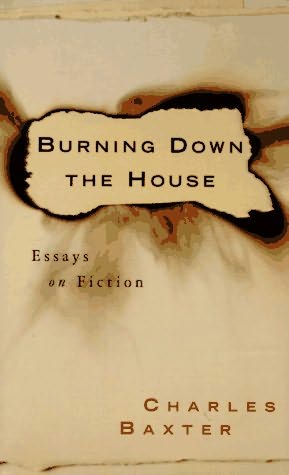
BURNING DOWN THE HOUSE, by Charles Baxter


Burning Down the House: Essays on Fiction, by Charles Baxter

I started reading it a while ago---completely fascinating, it's blowing my mind in several ways.

But now, every time I randomly hear the Talking Heads song he named the book after, I start to think it's a sign pointing me to Minnesota. And by "every time," I mean the two times that that's happened recently.

1) I'm watching the third season of Six Feet Under (don't tell me anything!) on DVD, and in the episode where it's Ruth's birthday, that song plays while they're all dancing.

2) I have my iPod on shuffle, and it comes up halfway through my bus ride home from work.

Here's your ticket pack your bag: time for jumpin' overboard
The transportation is here


Anyway, I mean to talk about the book (and several others) at some point. Right now, my brain is a warm gelatinous substance, and I'm going to drown my anxieties/exhaustion in tonight's new episode of Lost.

PS---Of course:
Everything's stuck together
I don't know what you expect staring into the TV set

*
PPS---

Books I'm reading right now
(I'm doing that bad thing where I move back and forth every few days):

Burning Down the House: Essays on Fiction, by Charles Baxter

Little
, by David Treuer


Books I'm almost finished with:

Believers, by Charles Baxter---I'm reading the title novella at the end

An Explanation for Chaos
, by Julie Schumacher---I'm reading the last, title story

CivilWarLand in Bad Decline
, by George Saunders---I'm reading the novella at the end: "Bounty"

Hmm...I think I've discovered a pattern. The problem is with me, not with the books. I zipped through all the stories up until the last of each, and then I started trading back and forth. Maybe it's really a subconscious effort to prolong the experience?

Book(s) I plan to start very soon, here:

Concertina, by M.J. Fitzgerald


(Post in progress...Lost started!)

LEAVING ATLANTA, by Tayari Jones


* Watch out for spoilers! *

I definitely don't want to ruin this book for anyone---I'm only about halfway through it myself. I'll try not to give away any major plot points, but if you're like me and you like to come to a book with a clean slate when you can, you might want to skip this post.

Tayari Jones (I encourage you to check out her blog) is on the fiction faculty at the Rutgers-Newark MFA program. Here's a description of Leaving Atlanta, her first novel, from the Rutgers website:

Her first novel, Leaving Atlanta, is a coming of age story set during the city’s infamous child murders of 1979-81. Jones herself was in the fifth grade when thirty African American children were murdered from the neighborhoods near her home and school. When asked why she chose this subject matter for her first novel, she says, “This novel is my way of documenting a particular moment in history. It is a love letter to my generation and also an effort to remember my own childhood. To remind myself and my readers what it was like to been eleven and at the mercy of the world. And despite the obvious darkness of the time period, I also wanted to remember all that is sweet about girlhood, to recall all the moments that make a person smile and feel optimistic.”

Leaving Atlanta received many awards and accolades including the Hurston/Wright Award for Debut Fiction. It was named “Novel of the Year” by Atlanta Magazine, “Best Southern Novel of the Year,” by Creative Loafing Atlanta. The Atlanta Journal-Constitution and The Washington Post both listed it as one of the best of 2002.

I'm on page 131 right now, and so far it's a moving and engaging read. The book has a couple of interesting little quirks that I've been thinking about.

The first is that she places herself (or at least a little girl with her name) in the story, as a peripheral character. It makes sense, because the book is set in a time and place that she experienced. At the same time, it's quirky, because it seems like the more common thing is for the author to just write the POV character as a version of themselves without saying anything about it. Little Tayari pops up here and there, never having much serious interaction with the main characters, but kind of present throughout.

The POV character in the first section is LaTasha (Tasha) Baxter. At one point, Tasha is thinking about a party she didn't get invited to:

"Oh," Tasha said. She was glad that she hadn't been invited; her mother probably would have done the very same thing and Tasha would have ended up like Tayari, looking at her math book, trying not to cry. (69)

It has a certain effect, at least for me---every time Tayari-the-fifth-grader is mentioned, I find myself drawn out of the story for just a tiny moment. I think about Tayari Jones, the author. Thinking about her reminds me that even though this novel is fiction, it's about a situation that really did happen. I wonder if that's what she was trying to do?

* Warning, interesting craft choice "spoiled" here---I liked the surprise of it *


The second thing I wanted to mention has to do with point of view. The first section of the book is told from Tasha's POV, using a very close third person. Nothing unusual there, but we really get to know Tasha, and we get to feel invested in her character and her situation. That's why it was such a surprise to turn the page to the second section---all of a sudden, we're thrown into a second person POV.

The most interesting thing about the use of the second person here, I think, is the way that we already know this "you" character. We were introduced to him, Rodney Green, through Tasha's POV in the first section of the book. He's another fifth-grader in the same class.

I think we're all taught that the second person is difficult to maintain. I think it works here because Jones has already set this character up for us. He has a context in relation to the other children and in relation to the setting. He's not just some vague, unknown "you"---he's Rodney from before. It's less jolting to "be" him, because we already know something about who and where he is. For me, it didn't take long for the second person POV to become (for the most part) comfortably invisible.

Again, though---the second person draws attention to itself, and there are more of those tiny moments when I'm pulled out of the story by it. It makes me think, again, about how this is a kind of historical fiction. Intentional? I guess I think so.

*

Just one last note about the use of Little Tayari Jones---I love that she often seems to be doing particularly goofy kid things:

Why doesn't she just ask you how old you are and move on? Tayari Jones, two aisles over, is sniffing rubber cement and could use a little adult supervision. But Miss Russell squats beside you and leans forward as if your vocational leanings are of some consequence. (122)

It makes me laugh every time, and it makes me like the author for using "her" character that way.

*

Update 1/17---I finished the book. The third and final section is in the first person, from another child's POV.

It ended too soon (at the right time, but...man.)

Fiction Faculty Books/My Current Reading List

So I made this list a while back, of books from all the faculty authors at the programs I've applied to. It's definitely not exhaustive, and for the most part I tried to focus on short stories---it's a long list! Basically I just wanted to have something with me to take to the library, to make sure I could find at least one book by each author. I'm embarrassed to say this, but I just recently realized that the Michener Center does in fact have a permanent faculty (I think?). So there aren't any books from them yet.

Authors and programs are listed in pretty much random order here. I apologize for any mistakes.
s= short stories, ya= young adult, e= essays, c= craft

CORNELL

J. Robert Lennon
Pieces for the Left Hand (s)
Mailman

Maureen McCoy
Junebug
Walking After Midnight

Ernesto Quiñonez
Bodega Dreams
Chango’s Fire

Stephanie Vaughn
Sweet Talk (s)

Helena Maria Viramontes
The Moths (s)
Their Dogs Came with Them
Under the Feet of Jesus

Robert Morgan
Gap Creek: The Story of a Marriage
The Balm of Gilead Tree (s)


RUTGERS-NEWARK


Tayari Jones
Leaving Atlanta
The Untelling

Alice Elliott Dark
In the Gloaming (s)
Naked to the Waist (s)

Jayne Anne Phillips (Director)
Black Tickets (s)
Fast Lanes (s)

Rigoberto Gonzalez (poetry)
Men without Bliss (s)


MINNESOTA


Charles Baxter
The Believers (s)
Burning Down the House (e)
The Feast of Love

M.J. Fitzgerald
The Placing of Kings
Concertina

Julie Schumacher (Director)
An Explanation for Chaos (s)
The Body is Water
Black Box (ya)

David Treuer
The Translation of Dr. Apelles: A Love Story
Little
The Hiawatha


MICHIGAN


Michael Byers
The Coast of Good Intentions (s)
Long for This World

Peter Ho Davies
The Ugliest House in the World (s)
Equal Love (s)
The Welsh Girl

Nicholas Delbanco
What Remains
The Writer’s Trade (s)
About My Table (s)
The Sincerest Form: Writing Fiction by Imitation (c)

Eileen Pollack (Director)
Paradise, New York


SYRACUSE


George Saunders
CivilWarLand in Bad Decline (s)
In Persuasion Nation (s)
Pastoralia (s)
The Brief and Frightening Reign of Phil

Arthur Flowers
De Mojo Blues: de quest of Highjohn de Conquer
Another Good Loving Blues
Cleveland Lee’s Beale Street Band
Mojo Rising: Confessions of a 21st Century Conjureman

Christopher Kennedy (Director, poetry)


UMASS AMHERST


Chris Bachelder
U.S.!
Bear v. Shark

Noy Holland
The Spectacle of the Body (s)

Sabina Murray
The Caprices (s)
A Carnivore’s Inquiry
Slow Burn


UMASS BOSTON


John Fulton
Retribution (s)
The Animal Girl (s)

Askold Melnyczuk
What is Told
Ambassador of the Dead
The House of Widows


U FLORIDA


Mary Robison
An Amateur’s Guide to the Night (s)
Why Did I Ever (s)
Believe Them (s)

Padgett Powell
Aliens of Affection (s)
Edisto
Typical (s)

David Leavitt

Family Dancing (s)
A Place I’ve Never Been (s)
Arkansas (s)
The Marble Quilt (s)

Jill Ciment
Small Claims (s)
The Law of Falling Bodies


TEXAS/MICHENER
(Visiting Faculty?)