Showing posts with label craft. Show all posts

THE DOG OF THE MARRIAGE, by Amy Hempel


You're probably wondering where all the "fiction" is---I've been wandering---so I thought I'd share this little review. I wrote it for a summer intro-to-fiction class. It could use some editing, but I'm sleepy, so I'm just shaking it off and setting it out to air.

Don't laugh, or better, do.

Goodnight : )


*
HERE BE SPOILERS!*


On Amy Hempel’s The Dog of the Marriage

(me, 7/2/07)


Amy Hempel’s collection of short stories, The Dog of the Marriage, is like a short series of small windows into large lives, lives belonging to women only slightly different from one another. At times, reading through the collection, it felt as though one character, one self was almost progressing into the next, also seeping into the reader---myself, as I continued down the trail.

All of these stories are written in the first person. There is a sort of flickering identity shared between the characters in this book, hard to put your finger on, and personally I suspect that this unifying “essence” is something from the life-breath of Hempel herself. The voice changes but is never unrecognizable, and I found this continuity to be very satisfying. Reading this book was like getting to look at one thing from nine subtly different insides, so that when the time came to part with the stories, I truly felt like something had been swapped between the complete work that I had read and myself.

These stories are about relationships, not-so-strangely enough. Besides the continuum of characterization already mentioned, the other element that brings these stories so close together is the unifying theme of “desire.” Hempel prefaces the collection with this hauntingly evocative little passage, an expression of the “thing” that these stories look at:

But the greatest desire of all is to be
In the dream of another,
To feel a slight pull, like reins,
To feel a heavy pull, like chains.
—Yehuda Amichai

After finishing Hempel’s book I felt as though I understood Amichai’s sentiment in a much deeper, more complex way than when I turned the page to the first story: these stories are about the need to be loved (needed, wanted, desired) and what happens when we’re not, what it means to hold on and what it means to let go. What it means when we are held onto, what it means when we are let go of.

Some of these stories, like “Jesus is Waiting,” “Reference #388475848-5” (which takes the epistolary form) and “Offertory” examine what it is to try to reach out, to come together.

The narrator in “Jesus is Waiting” desires unabashedly and without reason until a point of absurd, fragile beauty is reached. Maybe all of the stories in this collection are about that, in some way.

“Offertory” and “The Afterlife” in particular also seem to ask not only what wanting is, but what memory is, how memory serves to tie us to ourselves and to others—how these old memories, these old desires can either come between or hold together, and what the consequences are of each.

“Beach Town” seems to look at the ways in which we overhear the lives of others. Although the narrator does not really indulge in self-reflection, I think that this story asks us to reflect on how this kind of “taking in” can affect our own lives. After all, that’s what we do when we read a story (eavesdrop on the neighbors, watch a film, remember an old lover): we “overhear” someone else’s life, and hope to be changed in some way by doing so.

The namesake story of this collection, “The Dog of the Marriage,” is in itself a smaller series of even more fluidly connected lives. These four small pieces add up to a single expression that examines guilt and regret and a feeling that is not quite sentimental enough to be loneliness. I would describe the feeling expressed and explored within these stories as being more like an almost clinical sort of solitude, a solitude that comes with trying to turn certain things off within yourself, with trying to learn to feel resigned to things, or pretending you’re not. The “dog” in these marriages is not always of the canine variety, and the actual dogs are often far more faithful than the people. The “marriages” are usually anything but.

It is not always a comfortable or enjoyable experience, being drawn into the minds of these women, but it is always a stirring experience. “The Uninvited” is about what it is to be “loved” not just badly, but violently. What happens when the need (desire) to be loved becomes twisted within a person, and what it’s like to have that twisted desire forced upon you, on your body. The story is narrated by a 50 year-old rape counselor who has herself recently been raped by an acquaintance. She is afraid she might be pregnant, but has not followed the advice that she has given so many others over the years: she has not reported her attacker. She is feeling guilty for falling victim to her attacker even though she has spent her life teaching others not to. She doesn’t want to have to explain that she instinctively knew how to respond in order to save her life...that she pretended to love the rapist so he wouldn’t kill her.

In “The Uninvited,” Hempel uses an old film, from which the story takes its name, to draw unstated parallels and bring us into the narrator’s usually unspoken inner thoughts and conflicts. Just as the narrator wonders “to whom the title refers [in the movie]—to the ghosts or to the guests,” we are left thinking about not only the rapist she made the mistake of inviting into her home, but the seed she fears may have been planted in her womb.

The story “Memoir” lasts only one sentence, and I think it sums up with a beautiful succinctness what this collection is saying better than I ever could:

Just once in my life—oh, when have I ever wanted anything just once in my life?

This speaks to the feeling I got from these stories that they constitute a cycle or progression, and maybe to the idea that there are no beginnings or ends in this collection, only different kinds of desire.

I remember that some of the stories I’ve read from Hempel’s previous collections seemed to leave me with a sort of welling-up, while most of these made me feel a kind of settling-in, a “what-is-this?” digestion more than a “that-was-that” emotion. Most of these stories seem to avoid (surpass?) the traditional or basic idea of what story and plot are. They can be fragmentary, they move around in time. They have very open endings and often the crisis “moment” actually seems to be the entirety of the story. Resolution usually seems to be something that we as the readers need to reach for, instead of having it handed to us.


Hempel leaves us at just the tip of something with each of these. We must take the conflict within ourselves as we read each story (and she makes this easy with her attention to detail, voice and moment) in order to be able to understand the inertia of each piece. It is only by taking an active role in the experience that these stories “offer” up that we are able to see where it is that Hempel is pointing, and that is one of the many wonderful things about this wonderful collection of short stories.

end


*

PS---By the way, my cat threw up on this book (just a hairball) soon after I finished reading it, and I was really, really upset with him about it. After stomping around the living room for a while, I washed the dustcover, and I kept it. Now there's a funny little stain. Don't judge. Boots is forgiven.

Tucson Festival of Books: So Worth Not-Sleeping-In For


I've been meaning to post about the Tucson Festival of Books, which was really just awesome all around. I keep putting it off, because there's so much to write about, and I'm lazy and tired and should be doing other things. I have S. here visiting me this weekend, she's asleep in the other room, so I thought I'd squeeze in at least part of what I mean to say about the festival.

I started out at the poetry reading by Alison Hawthorne Deming and Luci Tapahonso (see the original post for more links.)

The wonderful Prof. Deming was my creative nonfiction undergraduate thesis advisor---she encouraged me to throw in a few poems, too. I learned so much from my time working with her, and she's really such a generous teacher and person, not to mention an immensely talented writer. I so enjoyed seeing her read and having the chance to chat for a bit.

She read from her new collection of poems (her fourth), called Rope. It's coming out through Penguin in September 2009. You can download the catalog entry for the book on her website. Here is the description offered there:

Alison Hawthorne Deming's fourth collection of poems follows the paths of imagination into meditations on salt, love, Hurricane Katrina, greek myth, and the search for extraterrestrial life, all linked by the poet’s faith in art as an instrument for creating meaning, beauty, and continuity—virtues diminished by the velocity and violence of our historical moment. The final long poem “The Flight,” inspired by the works of A. r. Ammons, is a twenty-first century epic poised on the verge of our discovering life beyond earth.


Later that afternoon I went to the "Writing Life" panel given by Jason Brown, Manuel Muñoz, Ander Monson and Kevin Canty. At first it looked like it was going to be just me and Prof. Deming (who happened to show up) and one other person in the audience---Canty took a picture of the sad little spectacle. The panel didn't make the general schedule, otherwise I'm sure there would have been plenty of people. Thankfully, a cadre of current UA MFA students and a few others showed up just in time.

Jason Brown mentioned that Aimee Bender once told him she "finds it painful to write," and that she sometimes actually ties her leg to her writing chair for two hours a day, to make sure she can't roam the house finding ways to avoid the writing. I love that.

I was going to just buy one book, I told myself I wouldn't spend more than that (I make $7.50/hr, so one new book = two hours of steaming milk, wiping tables and serving bacon) and I decided on Jason Brown's Why The Devil Chose New England for His Work, since I didn't have one of his books yet, and he's UA fiction faculty and I'm leaving. Long story short, I ended up buying a few.

Okay, I'm running out of time here. I want to jump in the shower before S. wakes up.

I have lots more to write about, but I want to add that Kevin Canty suggested a book for me called Art and Fear (because I asked the panel about writing and fear, and then turned a hot-lobsterish shade of red for the rest of the day---more about this later) and left me a very nice note when he signed my copy of his most recent book of stories, Honeymoon.

Ander Monson (new nonfiction faculty at UA, Wikipedia somehow describes him as "an American novelist, poet, nonfiction writer, and charming douche," no joke) left some encouraging words when he signed his Other Electricities for me, and he added a delightfully cryptic footnote.

Brown thinks Muñoz might "make it big time" (if he hasn't already), and Muñoz talked about how he often composes in his head, a habit he picked up during his no-time-to-write time in a publishing house. I do that too, probably most of us do, don't we? He said the fear never goes away.

Brown told it like it is, in a too-comical-to-be-depressing-really way. "Some people just don't have the stomach for the fear," he said, amongst other things. Gulp?

Tucson Festival of Books


So, tomorrow morning marks the start of the very first Tucson Festival of Books!

Here is a link to maps and schedules, and here is the festival blog.

The UA Poetry Center has a list of their events.

The Pima County Public Library has a page about the festival.

There's an entry about it on the NewPages blog.

The Arizona Public Media page features video.

They even have a Facebook page.

And here's a clip about the festival on Youtube.

*


Here's what I'm thinking for Saturday:

Poetry readings by
Alison Hawthorne Deming and Luci Tapahonso will be the first of the day. Former U.S. Poet Laureate Billy Collins will be giving a reading to close the day out.

I'm also really interested in a talk called "Fiction out of Friction: Evolution, Arabs and Other Controversial Topics," with Robin Brande and Laila Halaby. Unfortunately, it's at the same time as Prof. Deming's reading! I will happily choose to go see my former teacher, but I hope I'll have a chance to hear about the Halaby/Brande talk.

Also at the same time is a talk on "Public Speaking for Shy Writers" with Michael Charton. Too bad!

My next pick: Fenton Johnson, Beth Alvarado and Naomi Benaron will give a talk on "Shaping Truth in Memoir and Fiction."

It's at the same time as two other talks that sound interesting: "Life Worth Living, Inside Out: The Sufi and the Sage," with Albert Clayton Gaulden and Mansur Johnson..."Oral History and Community Story: The Foundation and Inspiration of Fiction Writing," with Patricia Preciado Martin.

Later on, I plan to attend this very nifty panel discussion, which is one of the events at the UA BookStore:
Jason Brown, Kevin Canty, Ander Monson & Manuel Munoz

"The Writing Life: Surviving & Publishing in Today's Market"

And then this one:
Aurelie Sheehan and Laura Fitzgerald

"Art or Craft? What Makes Fiction Work and Why?"


That means I'll miss a talk on "The Art of Eavesdropping," with Stephen Kuusisto. (We just did an exercise on dialogue and eavesdropping in the community college workshop I'm taking.) And a talk called "In the Driver's Seat: The Character-Driven Plot," with Elizabeth McKenzie, Alfredo Vea and Ann Cummins. And one called "We Cannot Look Away: Exploring a Social Conscience Through Writing," with Stella Pope Duarte...tempting.


Of course, this is a pretty ambitious schedule. And I'm giving up my precious "sleeping in" days, so hopefully all the literary excitement will keep my energy levels high. But seriously, what an incredible opportunity, right here in Tucson. Hooray!


*


On Sunday, I plan to go see the

"KALACHAKRA" SAND MANDALA

Viewing & Dissolution Ceremony
for the Wheel of Time, Sand Mandala with respected Buddhist scholar and former attendant to the Dalai Lama, Losang Samten.

More soon...

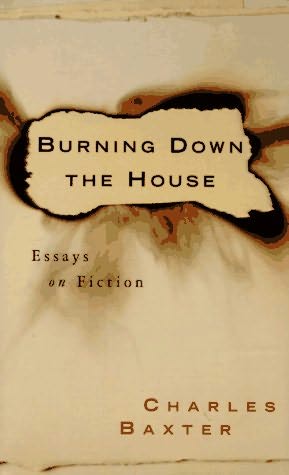
BURNING DOWN THE HOUSE, by Charles Baxter


Burning Down the House: Essays on Fiction, by Charles Baxter

I started reading it a while ago---completely fascinating, it's blowing my mind in several ways.

But now, every time I randomly hear the Talking Heads song he named the book after, I start to think it's a sign pointing me to Minnesota. And by "every time," I mean the two times that that's happened recently.

1) I'm watching the third season of Six Feet Under (don't tell me anything!) on DVD, and in the episode where it's Ruth's birthday, that song plays while they're all dancing.

2) I have my iPod on shuffle, and it comes up halfway through my bus ride home from work.

Here's your ticket pack your bag: time for jumpin' overboard
The transportation is here


Anyway, I mean to talk about the book (and several others) at some point. Right now, my brain is a warm gelatinous substance, and I'm going to drown my anxieties/exhaustion in tonight's new episode of Lost.

PS---Of course:
Everything's stuck together
I don't know what you expect staring into the TV set

*
PPS---

Books I'm reading right now
(I'm doing that bad thing where I move back and forth every few days):

Burning Down the House: Essays on Fiction, by Charles Baxter

Little
, by David Treuer


Books I'm almost finished with:

Believers, by Charles Baxter---I'm reading the title novella at the end

An Explanation for Chaos
, by Julie Schumacher---I'm reading the last, title story

CivilWarLand in Bad Decline
, by George Saunders---I'm reading the novella at the end: "Bounty"

Hmm...I think I've discovered a pattern. The problem is with me, not with the books. I zipped through all the stories up until the last of each, and then I started trading back and forth. Maybe it's really a subconscious effort to prolong the experience?

Book(s) I plan to start very soon, here:

Concertina, by M.J. Fitzgerald


(Post in progress...Lost started!)

Details, Details


I have to give a presentation on "authenticating details" today. It's an assignment for my community college fiction workshop. It's just beginner's stuff, because it's really an introductory level class. But it's keeping me honest, and I have plenty to learn. Plus, this kind of thing is probably good practice, considering I'll be teaching sometime soonish! I can hardly believe it, me---teaching. Exciting and strange.

This is from the handout I made (I have a partner, but I'm only including the parts I prepared):


*

Authenticating details are details that reveal something particular about who a character is—something about their personality, background, situation, emotional state etc. When these kinds of revealing details are specific and unique, they work to make us believe the character—they authenticate the character for the reader.

Sometimes, authenticating details are called significant details. This is from pages 26-29 of Writing Fiction: A Guide to Narrative Craft, by Janet Burroway and Elizabeth Stuckey-French:


Specific, definite, concrete, particular details—these are the life of fiction. Details (as every good liar knows) are the stuff of persuasiveness. (26)

A detail is “definite” and “concrete” when it appeals to the senses. It should be seen, heard, smelled, tasted, or touched. (26)

The [...] writer must deal in sense detail [and] these details must be details “that matter.” [You must] mean more than you say. (27)

A detail is concrete if it appeals to one of the five senses; it is significant if it also conveys an idea or a judgment or both. The windowsill was green is concrete, because we can see it. The windowsill was shedding flakes of fungus-green paint is concrete and also significant because it conveys an idea that the paint is old and suggests the judgment that the color is ugly. The second version can also be seen more vividly. (27)

[...] if you are to realize your characters through detail, you must be careful to select the details that convey the characteristics essential to our understanding. You must select the significant. (29)

No amount of concrete detail will move us [...] unless it also implicitly suggests meaning and value. (29)


Writing Fiction also points out that “active verbs [...] tend to call forth significant details” (34). Here is a comparison from the book:

A general verb creates a general impression, but a precise, active verb conveys the exact picture in the reader’s mind. For example:

General Specific

walk------ Does the waiter scurry or amble?
yell------- Does the coach demand or bellow?
swim----- Does the child splash or glide?
climb----- Does the hiker stumble up the hill or stride?


Exercises, from page 203 of John Gardner’s The Art of Fiction: Notes on Craft for Young Writers:

Describe a landscape as seen by an old woman whose disgusting and detestable old husband has just died. Do not mention the husband or death.

Describe a lake as seen by a young man who has just committed murder. Do not mention the murder.

Describe a building as seen by a man whose son has just been killed in a war. Do not mention the son, war, death, or the old man doing the seeing; then describe the same building, in the same weather and at the same time of day, as seen by a happy lover. Do not mention love or the loved one.


*


We also have a few examples, and our own little exercise, involving
this picture from Found Magazine.

LEAVING ATLANTA, by Tayari Jones


* Watch out for spoilers! *

I definitely don't want to ruin this book for anyone---I'm only about halfway through it myself. I'll try not to give away any major plot points, but if you're like me and you like to come to a book with a clean slate when you can, you might want to skip this post.

Tayari Jones (I encourage you to check out her blog) is on the fiction faculty at the Rutgers-Newark MFA program. Here's a description of Leaving Atlanta, her first novel, from the Rutgers website:

Her first novel, Leaving Atlanta, is a coming of age story set during the city’s infamous child murders of 1979-81. Jones herself was in the fifth grade when thirty African American children were murdered from the neighborhoods near her home and school. When asked why she chose this subject matter for her first novel, she says, “This novel is my way of documenting a particular moment in history. It is a love letter to my generation and also an effort to remember my own childhood. To remind myself and my readers what it was like to been eleven and at the mercy of the world. And despite the obvious darkness of the time period, I also wanted to remember all that is sweet about girlhood, to recall all the moments that make a person smile and feel optimistic.”

Leaving Atlanta received many awards and accolades including the Hurston/Wright Award for Debut Fiction. It was named “Novel of the Year” by Atlanta Magazine, “Best Southern Novel of the Year,” by Creative Loafing Atlanta. The Atlanta Journal-Constitution and The Washington Post both listed it as one of the best of 2002.

I'm on page 131 right now, and so far it's a moving and engaging read. The book has a couple of interesting little quirks that I've been thinking about.

The first is that she places herself (or at least a little girl with her name) in the story, as a peripheral character. It makes sense, because the book is set in a time and place that she experienced. At the same time, it's quirky, because it seems like the more common thing is for the author to just write the POV character as a version of themselves without saying anything about it. Little Tayari pops up here and there, never having much serious interaction with the main characters, but kind of present throughout.

The POV character in the first section is LaTasha (Tasha) Baxter. At one point, Tasha is thinking about a party she didn't get invited to:

"Oh," Tasha said. She was glad that she hadn't been invited; her mother probably would have done the very same thing and Tasha would have ended up like Tayari, looking at her math book, trying not to cry. (69)

It has a certain effect, at least for me---every time Tayari-the-fifth-grader is mentioned, I find myself drawn out of the story for just a tiny moment. I think about Tayari Jones, the author. Thinking about her reminds me that even though this novel is fiction, it's about a situation that really did happen. I wonder if that's what she was trying to do?

* Warning, interesting craft choice "spoiled" here---I liked the surprise of it *


The second thing I wanted to mention has to do with point of view. The first section of the book is told from Tasha's POV, using a very close third person. Nothing unusual there, but we really get to know Tasha, and we get to feel invested in her character and her situation. That's why it was such a surprise to turn the page to the second section---all of a sudden, we're thrown into a second person POV.

The most interesting thing about the use of the second person here, I think, is the way that we already know this "you" character. We were introduced to him, Rodney Green, through Tasha's POV in the first section of the book. He's another fifth-grader in the same class.

I think we're all taught that the second person is difficult to maintain. I think it works here because Jones has already set this character up for us. He has a context in relation to the other children and in relation to the setting. He's not just some vague, unknown "you"---he's Rodney from before. It's less jolting to "be" him, because we already know something about who and where he is. For me, it didn't take long for the second person POV to become (for the most part) comfortably invisible.

Again, though---the second person draws attention to itself, and there are more of those tiny moments when I'm pulled out of the story by it. It makes me think, again, about how this is a kind of historical fiction. Intentional? I guess I think so.

*

Just one last note about the use of Little Tayari Jones---I love that she often seems to be doing particularly goofy kid things:

Why doesn't she just ask you how old you are and move on? Tayari Jones, two aisles over, is sniffing rubber cement and could use a little adult supervision. But Miss Russell squats beside you and leans forward as if your vocational leanings are of some consequence. (122)

It makes me laugh every time, and it makes me like the author for using "her" character that way.

*

Update 1/17---I finished the book. The third and final section is in the first person, from another child's POV.

It ended too soon (at the right time, but...man.)